About PRC Research-to-Practice
The PRC’s Research-to-Practice Team operates as one component of Colorado’s statewide Prevention Support System. In collaboration with state and local partners, we have developed these tools to support communities implementing evidence-based programs (EBPs). All of our research-to-practice tools are designed from research-informed best practices and with the needs of implementation teams in mind. We recommend using these tools and how-to guides to inform your decisions during all phases of program implementation.
Guidebooks
For a deep dive into select prevention topics, check out these prevention guidebooks.
Fidelity Monitoring Tools
- Fidelity Monitoring Checklist (Self-Report)
- Use this if the program you are implementing does not have its own checklist.
- Fidelity Monitoring Checklist (Observer-Report)
- Use this if the program you are implementing does not have its own checklist.
Policy and Advocacy Briefs
These briefs are particularly designed for those working in prevention policy spaces or advocating for local prevention initiatives. To request a local policy brief, contact us at prevention@colostate.edu.
Research-to-Practice Briefs
These research-to-practice (RTP) briefs include considerations for many prevention domains to accommodate a variety of users. See the following categories for RTP briefs designed for families, schools, practitioners, and more.
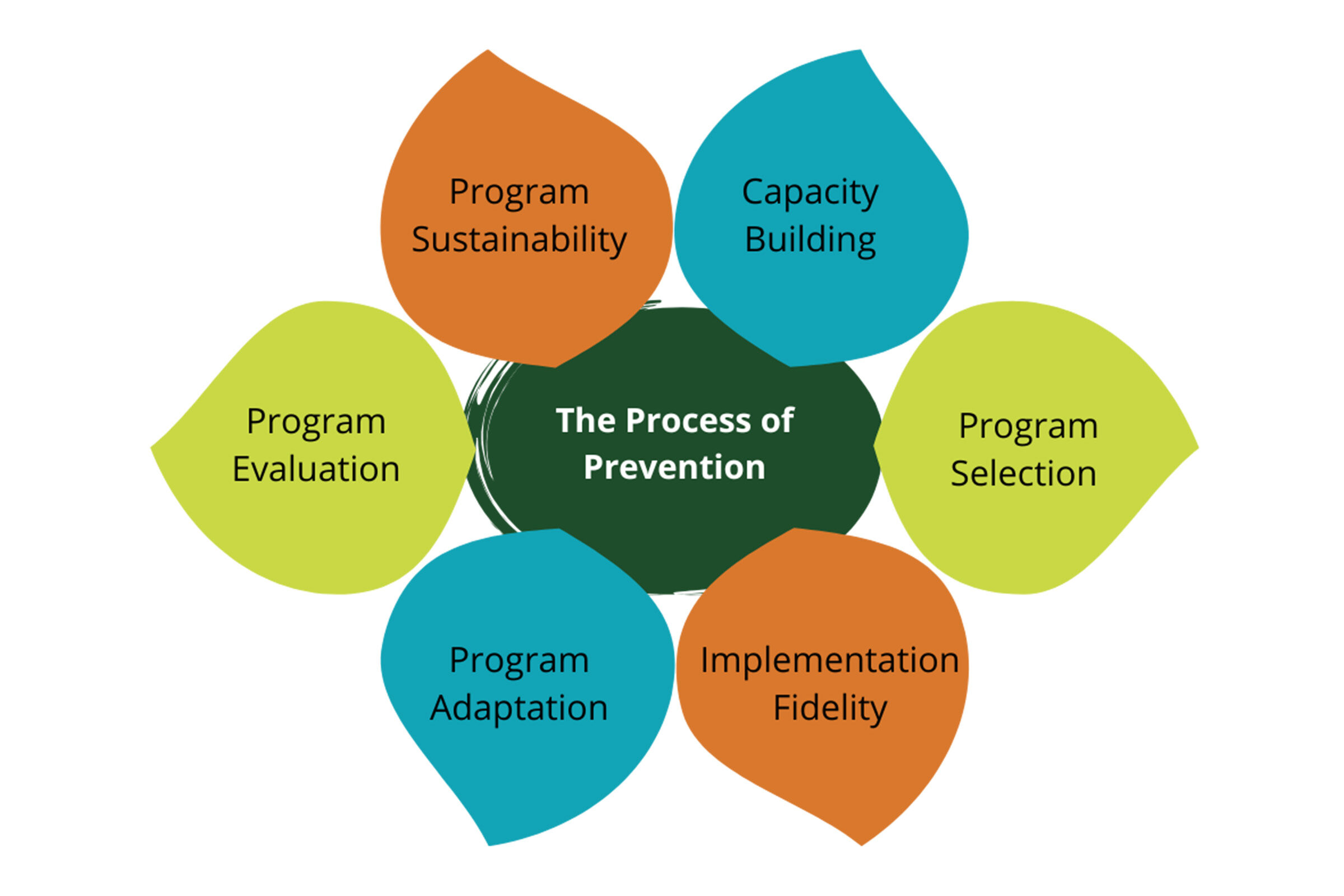
Process of Prevention
Process of Prevention RTP Briefs are curated for general prevention professionals across various community settings. For self-paced e-courses on these topics, consider registering for our no-cost prevention courses.
Capacity Building
- Community Needs Assessment | How to better understand your community.
- Coalitions Part 1 | Coalitions defined and how to form them.
- Coalitions Part 2 | Making your coalition effective and successful.
- Coalitions Part 3 | Evaluating success and effectiveness.
Implementation Fidelity
- “What is Fidelity?” tool
- Fidelidad | ¿Qué es? ¿Por qué importa?
Program Adaptation
- Adapting EBPs Part 1 | Adapting EBPs: The do’s and do not’s.
- Adapting EBPs Part 2 | Adapting EBPs: common reasons.
- Cultural Adaptations Part 1 | Considering culture when balancing fidelity and adaptations of EBPs.
- Cultural Adaptations Part 2 | A step-by-step guide to assist your implementation team in making cultural adaptations
- Cultural Adaptations to EBPs for Latino/a Immigrant Communities and Families | How to adapt
- Adaptando EBPs Parte 1 | Lo que se debe y no se debe hacer
- Adaptación de EBPs Parte 2 | Razones comunes
- Adaptaciones Culturales Parte 1 | Considerando la cultura al equilibrar la fidelidad y las adaptaciones de programas basados en la evidencia (EBPs)
- Adaptaciones Culturales Parte 2 | Una guía paso a pas
- Adaptaciones Culturales a Programas Basados en Evidencia (EBPs) para Comunidades y Familias de Inmigrantes Latinos/as | Cómo adaptarse
Data and Evaluation Tools
- Theory of Change | Understanding program goals and outcomes
- Logic Model Template | Build your own
- Data Resources | Quick links to local and national data sources
- Participant Survey Annotated Example | How to assemble your program survey
- Developing a Program Evaluation Plan | Program Evaluation Planning
- Process Evaluation | What is Process Evaluation
- Outcome Evaluation | How to evaluate program outcomes
- Communicating Evaluation Results | How to disseminate your findings
- Checklist for Program Evaluation Planning | A one-page checklist for planning your evaluation
- Checklist for Developing Participation Surveys | A one-page checklist when making program surveys
Program Sustainability
- Program Sustainability | What is it, and how can you achieve it?
- Programas Sostenibles | ¿Qué es? ¿Cómo se puede lograr?
Tools for Schools
Tools for Schools RTP Briefs are particularly designed for practitioners in school-based settings who support local students, families, or staff through prevention programs and practices.
Promoting Positive School Climate
- Understanding and Cultivating a Positive School Climate | A White Paper
- School Community Readiness | To promote a positive school climate and culture
- Teachers | The impact of teachers on a positive school climate
- School Leaders | The impact of School Leaders on a positive school climate
- Special Service Providers | The impact of special service providers on a positive school climate
- School Board Members | The impact of school boards on a positive school climate
- Sustaining Positive School Climate and Culture | In schools and districts
Facilitating Difficult Conversations in Schools
- Facilitating Difficult Classroom Conversations
- Facilitating Difficult One-on-One Conversations at School
Checklist for School Administrators
- Checklist for Difficult Conversations with Families | Reminders when meeting with caregivers
- Meeting Template | Difficult Conversations with Families | Step-by-step meeting template
Social Media Health and Wellbeing
Social Media Health and Wellbeing RTP Briefs are designed for the general community, with caregivers and teachers in mind.
Are you curious about the evolving research on how to navigate social media with the youth in your life? Check out our video playlist: Raising Digital Kids: A Series on Social Media and Youth
Raising Digital Kids: A Series on Social Media and Youth
- The Risks and Benefits of Youth Social Media Use | Understanding Youth Social Media Use
- Modeling Healthy Social Media Use and Setting Boundaries | Strengthen Family Connections
- Understanding and Responding to Cyberbullying | A 5-step Framework
- Digital Citizenship: Guiding Your Child in the Digital World | Core Pillars and Healthy Habits
- Understanding Digital Footprints | Building a Positive Online Presence
- Media Literacy: Navigating the Digital Landscape Together | Practical Strategies for Families
- Algorithms: A Family Media Literacy Toolkit | Taking Control of Your Feed
- Guiding Youth Through the World of AI | Raising Smart and Safe Kids
The Process of Prevention