


Why Determine Your Training Zones?
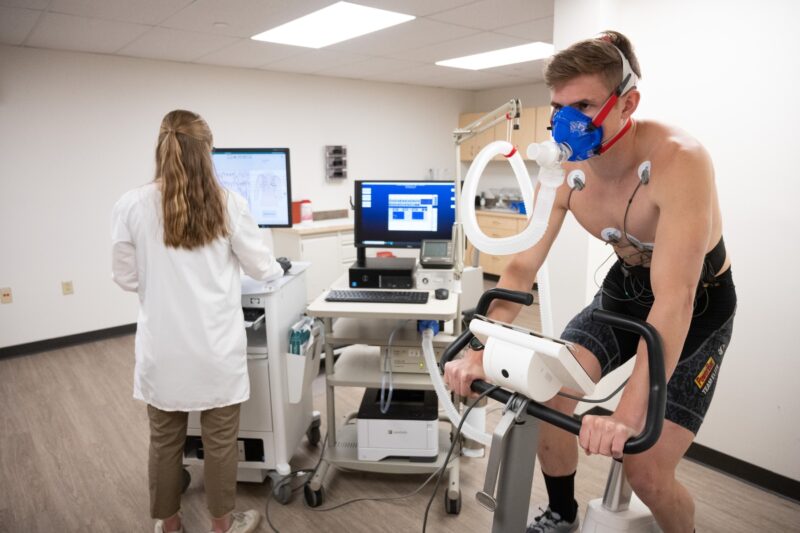
Training zones are specific heart rate or intensity ranges that reflect how your body uses energy during exercise. Each zone targets a different aspect of fitness—from building endurance in lower zones to improving speed and power in higher zones. Knowing your individual zones helps you train with purpose, avoid burnout, and maximize every workout.
Our advanced testing method combines blood lactate analysis and VO₂ measurement to provide the most accurate breakdown of your six physiologic training zones. Unlike generic formulas, this personalized approach gives you real-time insight into how your body performs, allowing you to structure workouts that align with your goals—whether you’re building a strong aerobic base with Zone 2 training or fine-tuning your high-intensity efforts.
What to Expect
Your Training Zone Determination Experience
- You may choose to complete this test on a treadmill or a stationary bike. We can also perform the test on your personal bike connected to a Wahoo Kickr, if compatible.
- You will be asked to run at various sub-maximal paces or cycle at various power outputs. You will continue to move through stages, increasing in speed or resistance until you cannot continue any further.
- Expired gases are collected during exercise through a mouthpiece and analyzed.
- Heart rate is measured continuously.
- Lactate is measured by collecting small amounts of blood via a finger or earlobe prick at the end of each stage.
- Appointments last 90 minutes with 30-60 minutes of exercise.
Data Generated
- Lactate threshold
- Heart rate at lactate threshold
- VO2max
- Maximal heart rate
- Training zones
- Respiratory exchange ratio (RER)
- RER is a number that shows whether your body is burning more fat or more carbs during exercise.
Schedule a Test
Have questions about testing? Fill out our inquiry form, contact us at hpcrl@colostate.edu, or call (970) 491-6120 to speak with a member of our Performance Health Analysis team.
Ready to schedule a test?
Frequently Asked Questions
When will I get my results?
You’ll receive a summary report within two weeks of your test date.
What is lactate?
Lactate is a metabolic byproduct produced during glucose metabolism that acts as a fuel source during exercise.
Why use both lactate and VO2 measurements to determine training zones?
Using both offers a more complete picture of an athlete’s metabolism:
- VO₂ data provides insights into oxygen consumption and energy system usage.
- Lactate data reveals how the body manages metabolic byproducts at different intensities. Together, they allow for more accurate zone determination than either metric alone.
Can I use this data for heart rate-based training?
Yes! Lactate and VO₂ values are often cross-referenced with heart rate at each stage, so you can establish heart rate zones for training without needing to rely on lab testing every session.
Is this test painful or risky?
This test is not painful, but it is very physically demanding. The finger prick for lactate sampling is minimally invasive, but some bruising and soreness may occur. The test is supervised by professionals to ensure optimal safety and comfort.
Latest Training Zones Determination Findings and Media Spotlights
- Kimberly Burke, M.S., Colorado State University: “How to target heart rate training zones effectively”
- Cleveland Clinic: “What To Know About Heart Rate Zones”
- Daniel G. Carey, Journal of Strength and Conditioning Research: “Quantifying Differences in the fat burning zone and the aerobic zone: Implications for training”