


July 2025 Cheers for Cherries
By John Zembeck and the KRNC staff
Life is like a bowl of cherries… but where did this saying come from, and what does it mean? To understand, it is necessary to explore the full scope and history of cherries. The good news is that July is peak cherry season, so digging into this saying is a timely investigation. Ready to learn more about one of summer’s favorite fruits?
Where Did Cherries Originate?
Cherries originated in Anatolia, the region we now know as Turkey. So how did this fruit become a popular staple amongst global pies, pastries, and cuisines? It took flight, literally. Legend has it that cherry seeds were carried and introduced to Europe through birds. We’ll leave it up to you to imagine what “carried” means in this case. After cherries were introduced to Europe, their cultivation began, as did their influence on regional cuisine. Centuries later, cherry seeds took sail, this time packed in the belongings of European colonizers, excited to bring their beloved fruit with them to the US. After just a little while, the demand for cherries in the US grew beyond what a select few gardens could produce. To keep up with demand, orchards were planted across the country, especially in the favorable growing regions of Oregon, Washington, Michigan, and California. Cherries are still so popular that each year the United States produces over 650 million pounds of cherries.
Cherries hold cultural significance across many regions and traditions. In ancient Greece cherries were included in mythological tales and symbolized beauty, love, fertility, and immortality. In Japan, cherry trees and their blossoms, known as Sakura, represent an integral part of the culture and its connection to nature. The blossoms are symbolic of the fleeting nature of life, but their short season creates a space for connection and gathering, known as Hanami. Hanami translates to “viewing the flowers” and is a time to relax, gaze at the trees, and share snacks and conversations with companions. In some regions of the US where cherry trees are grown, this same gathering occurs to further celebrate a shift of seasons and the reawakening of life and vitality after the winter season. From such traditions, the saying “life is like a bowl of cherries” is born, as the fruit and its life cycle remind us of the sweetness of life.

What Are the Different Types of Cherries?
Though many different cherry varieties are grown and sold, they are generally classified into just two categories – sweet or tart.
Sweet cherries include the Bing, Queen Anne, Lambert, Sweet Heart, Skeena, Rainier, Chelan, Van, and Benton varieties. These are broadly categorized and sold as “Dark Sweet Cherries.” This type of cherry is delicious and sweet on its own and is the most common variety used for snacking.
Tart (or sour) cherries include Morello, Montmorency, Amarena, and North Start cherries. They have the shortest harvest season, which typically only occurs for a few weeks in mid- to late-June. They are rarely sold in grocery stores and are most likely to be found at farmers’ markets, local produce stands, or U-pick farms. Because of their short harvest season, they are often flash frozen and sold in frozen form to be thawed and used throughout the season or turned into cherry juice.
When Are Cherries in Season?
Cherries are in season from mid-May to mid-August, and the peak of their harvest typically occurs in July. However, cherries can be purchased year-round in dried and frozen forms.
.
How to Pick Cherries:
When selecting cherries, there are a couple of factors that you should be looking for:
- Color: When looking at fresh cherries, they should be a bright red to a deep red-mahogany color, based off the type of cherry. However, some varieties, such as Rainier cherries have skins with blush, red, and yellow colors. While checking the color of cherries, also look out for any white, blue, or green spots that indicate the presence of mold. If you find one cherry with a mold spot, it does not mean the whole bag is bad. But do ensure there are minimal cherries with mold present, discard any cherries with mold, and wash the remaining bag immediately before consuming.
- Firmness: When buying fresh cherries, they should be firm to touch, and free from soft spots, bruising, or leaking juice.
- Stems: Fresh cherries should still have their stems attached. If you notice a bag of cherries has a bunch of fallen fruit at the bottom of the bag without the stems, do a double check for any soft spots or sign of mold, which could further indicate the cherries are past their prime.
How Should I Store Fresh Cherries?
- Fridge: Unless you’re eating them right away, cherries should always be stored in the refrigerator. To keep them fresh, it’s important to keep them dry—wait to wash them until just before eating. While storing them in their original bag is okay, it’s even better to transfer them to a wide, flat container lined with paper towels to absorb any moisture. With proper storage, cherries can stay fresh for at least a week in the fridge.
- Freezer: If you are planning to freeze your cherries, wash and pit each cherry first, then spread them out on a baking sheet lined with parchment paper. Freeze until mostly solid, then transfer into air-tight bags. This ensures that the cherries will not freeze into a giant, icy mess.
- Note: For any storage method listed above, discard cherries that have burst open or have major bruises and blemishes.
What Are the Nutrition Benefits of Cherries?
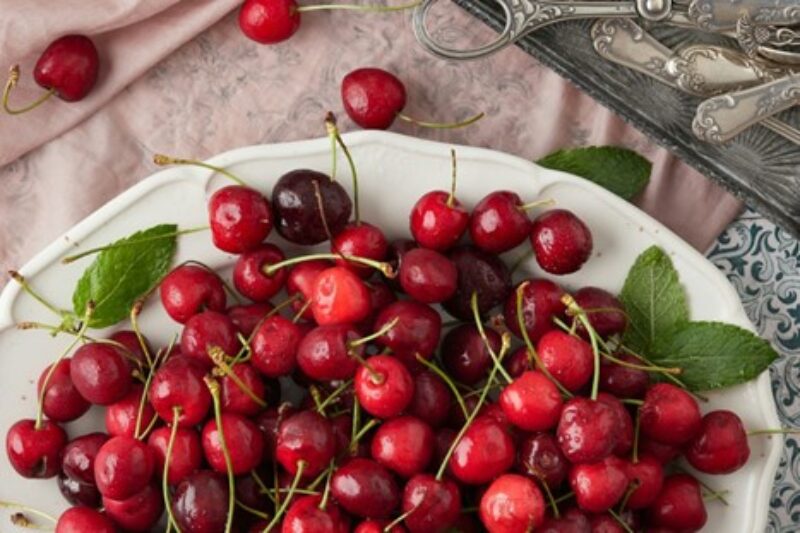
Cherries have a variety of health benefits due to the high content of antioxidants, vitamins, and fiber. Here are a few of the beneficial components of cherries:
- Phytochemicals: Phytochemicals refer to a variety of compounds uniquely found in plants. Cherries contain many of these, including a compound called anthocyanin, which is responsible for their red color. Phytochemicals provide antioxidant and anti-inflammatory benefits that help reduce the risk of many chronic diseases and may help reduce muscle soreness after exercise.
- Fiber: Adding in cherries to daily meals and snacks can help you reach your daily fiber goals – 1 cup of pitted cherries has 3 grams! Consuming adequate fiber supports digestive health, heart health, and can help regulate blood sugar and energy levels.
- Potassium: Cherries are rich in this electrolyte with 8-10% of your daily needs in 1 cup of pitted cherries. This means cherries can help replenish lost electrolytes, along with adequate water, after sweating in the summer sun. Adequate potassium intake may also help with the regulation of blood pressure.
- Vitamin C: Oranges aren’t the only fruit rich in vitamin C! Cherries contain a good dose of this nutrient that is associated with healthy skin, wound repair, and immune support. 1 cup of pitted cherries provides approximately 15% of the daily recommended amount of vitamin C.
How Can I Prepare Cherries?
First things first, before preparing cherries, be sure to carefully separate and discard cherry pits. The pits contain cyanide, which can be poisonous if crushed. Once you get your cherries pitted, here are some ideas!
- Boiling: One of the simplest ways to cook cherries. Place the cherries in a pot, add water or sugar, and bring them to a boil. Reduce the heat and simmer for 10–15 minutes, or until the cherries are tender. These cherries can be cooled and used as a jam alternative or topping for baked goods.
- Steaming: A great method to cook cherries while preserving their natural flavor and texture. Place the cherries in a steamer basket, steam for 5–7 minutes, and serve.
- Roasting: Roasting brings out the natural sweetness of cherries and adds a caramelized flavor. Preheat your oven to 375°F (190°C), place the cherries on a baking sheet, and roast for 20–25 minutes, or until tender.
- Fresh: Of course, cherries are also great as they are, no cooking required (a great option in the summer heat!) Simply pit them, eat them as is, or try out one of the recipe ideas below!
What Can I Pair with Cherries?
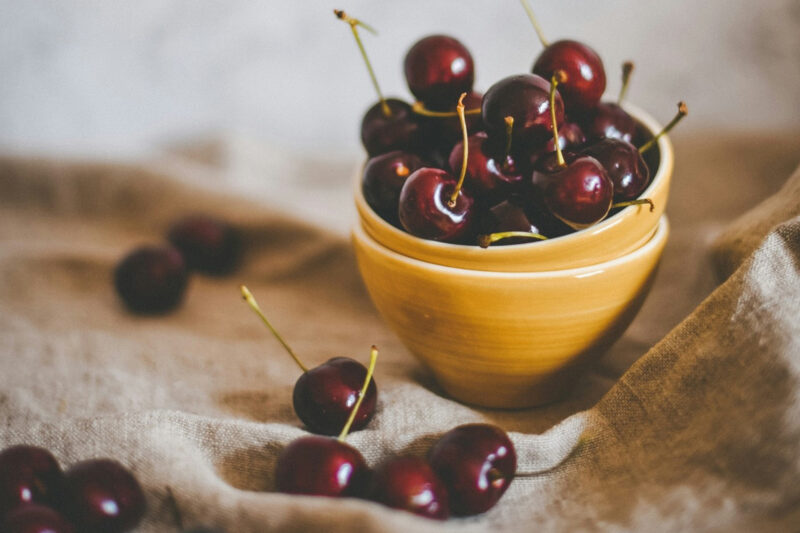
Are you wondering how to be a flavor matchmaker with seasonal cherries? Good news for you is that cherries are quite compatible with, and have a sweetness that pairs well with a variety of foods including:
- Nuts: Walnuts, known for their earthy and slightly bitter taste, bring a contrasting note that balances the sweetness of cherries. Almonds pair great as well, with their delicate sweetness and nutty aroma enhancing the overall flavor profile of cherries.
- Citrus: All three types complement the sweetness of cherries. Oranges provide a subtle contrast to the tartness of cherries, lemons add brightness and a tangy kick, while limes contribute a unique zesty flavor.
- Goat Cheese: The richness and tang of goat cheese pairs well with the sweetness of cherries.
- Herbs: Mint, thyme, rosemary, tarragon, and basil all pair well with cherries in savory and sweet dishes.
- Meat: Cherries pair well with beef, pork, chicken, and duck for savory applications.
Cherry Recipe Inspiration
- Check out our Recipe of the Month for Gluten-Free Cherry Almond Cookies
- Cherry berry smoothie – replace half of the berries called for in your favorite smoothie with fresh or frozen pitted cherries
- Toss fresh or dried cherries into a green or grain salad, and pair with a lemon or poppyseed vinaigrette
- Check out our past recipe for Garam Masala-Spiced Chickpea Salad, and use fresh or dried cherries in place of the stone fruit
- Add ½ cup diced fresh or dried cherries into Cinnamon Spice Quinoa and Oat Muffins
- Boil cherries, as directed above, and serve alongside roasted pork tenderloin
- Add fresh, thawed from frozen, or dried cherries on top of Greek yogurt along with mini chocolate chips, granola, and/or nuts for a tasty breakfast or snack
Did you know the phrase “life is like a bowl of cherries” is actually incomplete? The full phrase is “life is like a bowl of cherries, some are sweet, some are sour, some have worms.” We wish you a cherry season free of worms, but one full of the flavor and health benefits that both sweet and tart cherries can provide!
Get to know the author:
Zembeck is a junior majoring in dietetics and nutrition & fitness. He is specifically interested in learning about being a sports dietitian. One fun fact about Zembeck: he played soccer in Iceland!
More Information:
For additional resources for healthy eating, check out these programs from our registered dietitian nutritionists. Find delicious and healthy recipes on our Recipes page! More health tips are also available at the College of Health and Human Sciences Pinterest board. Lastly, don’t forget to sign up for the KRNC monthly newsletter!